 Free Resume Download
Cover letter at a glance
Best fit
career change technology applicants who need a modern cover letter that supports a focused application.
File and editing
Editable Microsoft Word DOCX file with a practical letter structure and no account, payment, or email gate.
Review focus
Guidance covers opening paragraph strategy, body paragraph proof, tone, keywords, and common customization mistakes.
How to use this cover letter well
This format is meant for role pivots where the employer needs help seeing the bridge between your past work and the direction you want next. It creates space to explain the transition while still keeping the letter practical.
A strong career-change letter should reduce confusion quickly. The reader should understand not just that you want a change, but why your previous work still makes you credible.
Who this cover letter is for
Career changers, returning professionals, and applicants repositioning prior experience for a new field.
Candidates whose titles do not obviously match the next role, but whose underlying strengths do.
Why this layout works
The structure helps you state the target clearly and then support it with transferable evidence. That matters because vague change narratives usually weaken trust.
It also gives enough room to explain motivation without turning the letter into a personal essay.
How to customize the opening paragraph
State the new target role directly and name the relevant experience you already bring into that transition.
Use the opening to show intention and credibility together, not just enthusiasm about starting over.
What to include in the body
Choose examples that show transferable judgment: project ownership, communication, analysis, customer work, operations, teaching, or execution under pressure.
If you completed training, side projects, or certifications, mention them only when they reinforce the same transition story.
ATS and tone considerations
Use the destination role's language where it matches your experience, but avoid pretending you already held a title you did not hold.
Keep the tone confident and explanatory. The employer is looking for a believable bridge, not a dramatic reinvention.
FAQ
Should I explain why I am changing careers?
Yes, briefly, if it strengthens the story. Focus on fit and direction rather than dissatisfaction with the past.
Do I need to mention every transferable skill?
No. Two or three well-supported examples are usually more persuasive than a long list.
Related cover letters
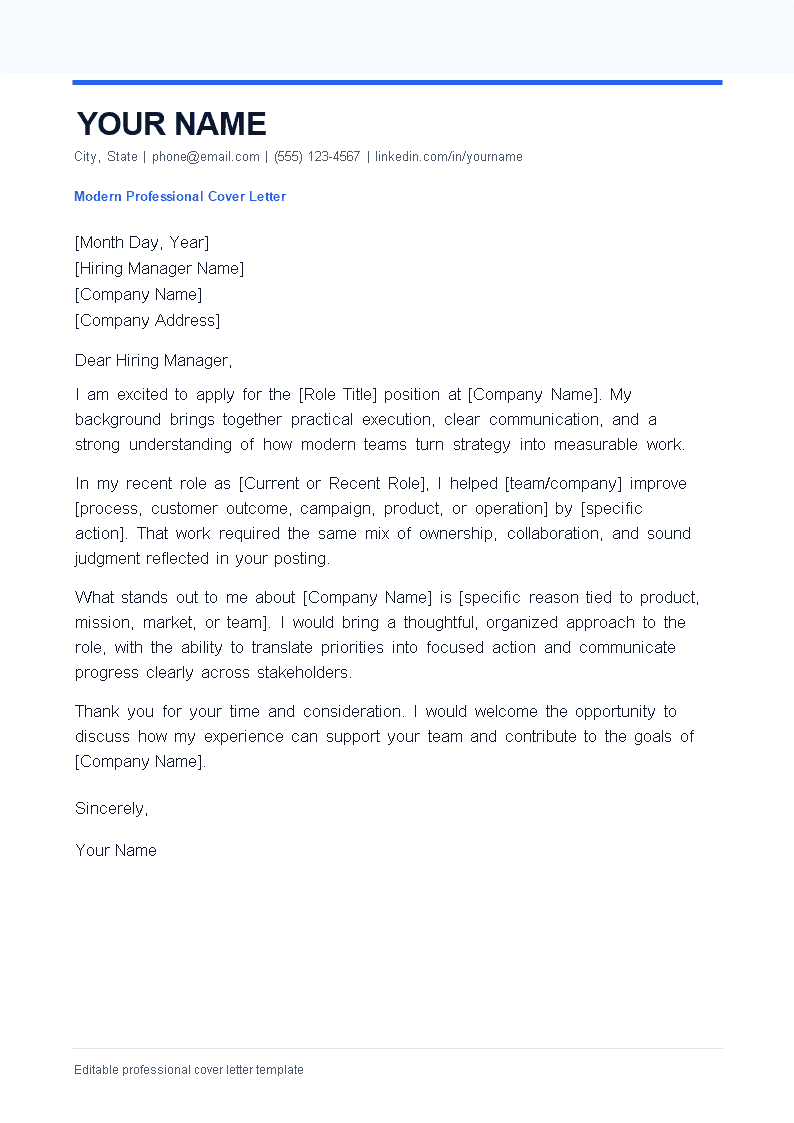
A clean two-paragraph layout for technology, marketing, and business roles that need a polished first impression.
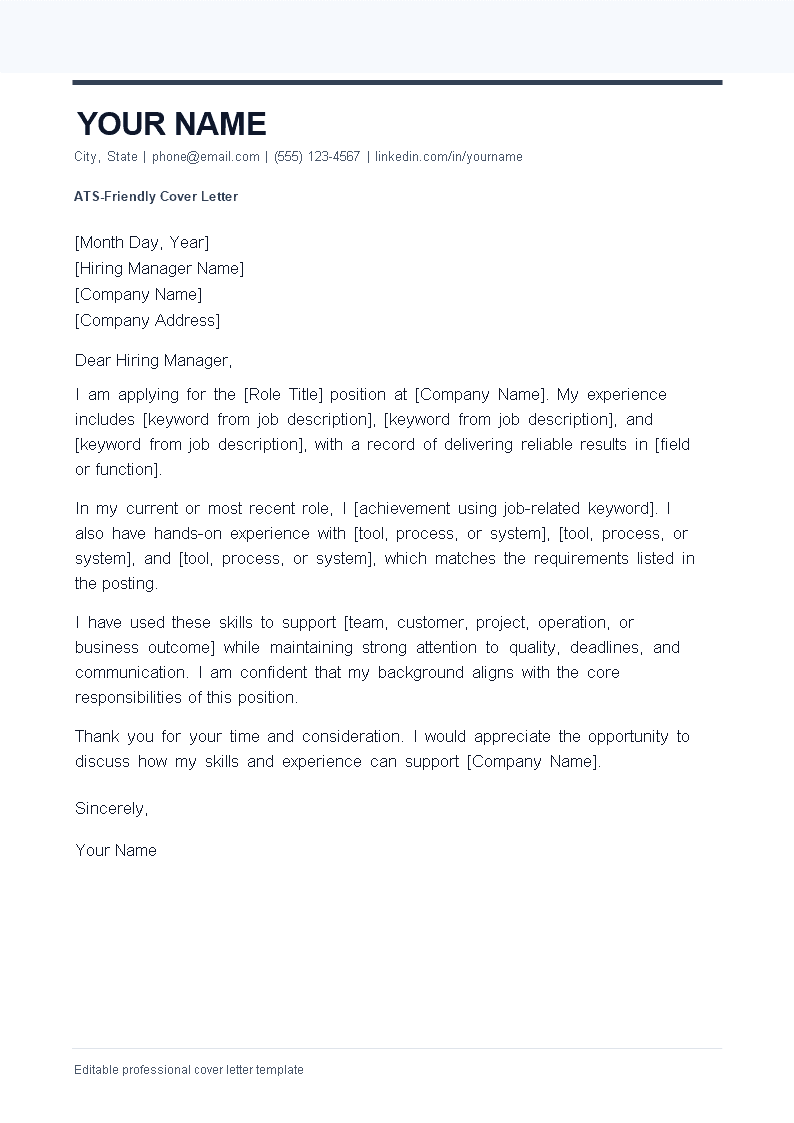
A keyword-ready plain-format cover letter built for online applications, recruiter scans, and applicant tracking systems.
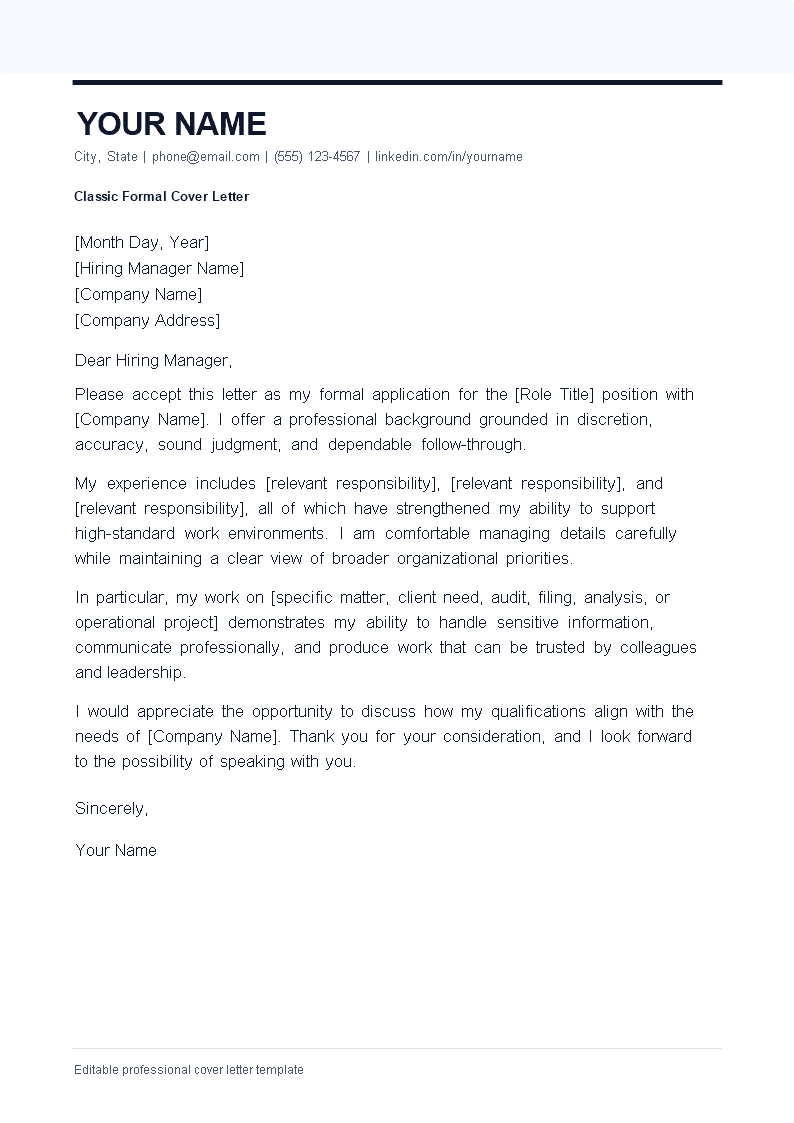
A traditional block-letter format for legal, finance, government, and other conservative hiring settings.